
The 36th JASID Annual Conference in Japan
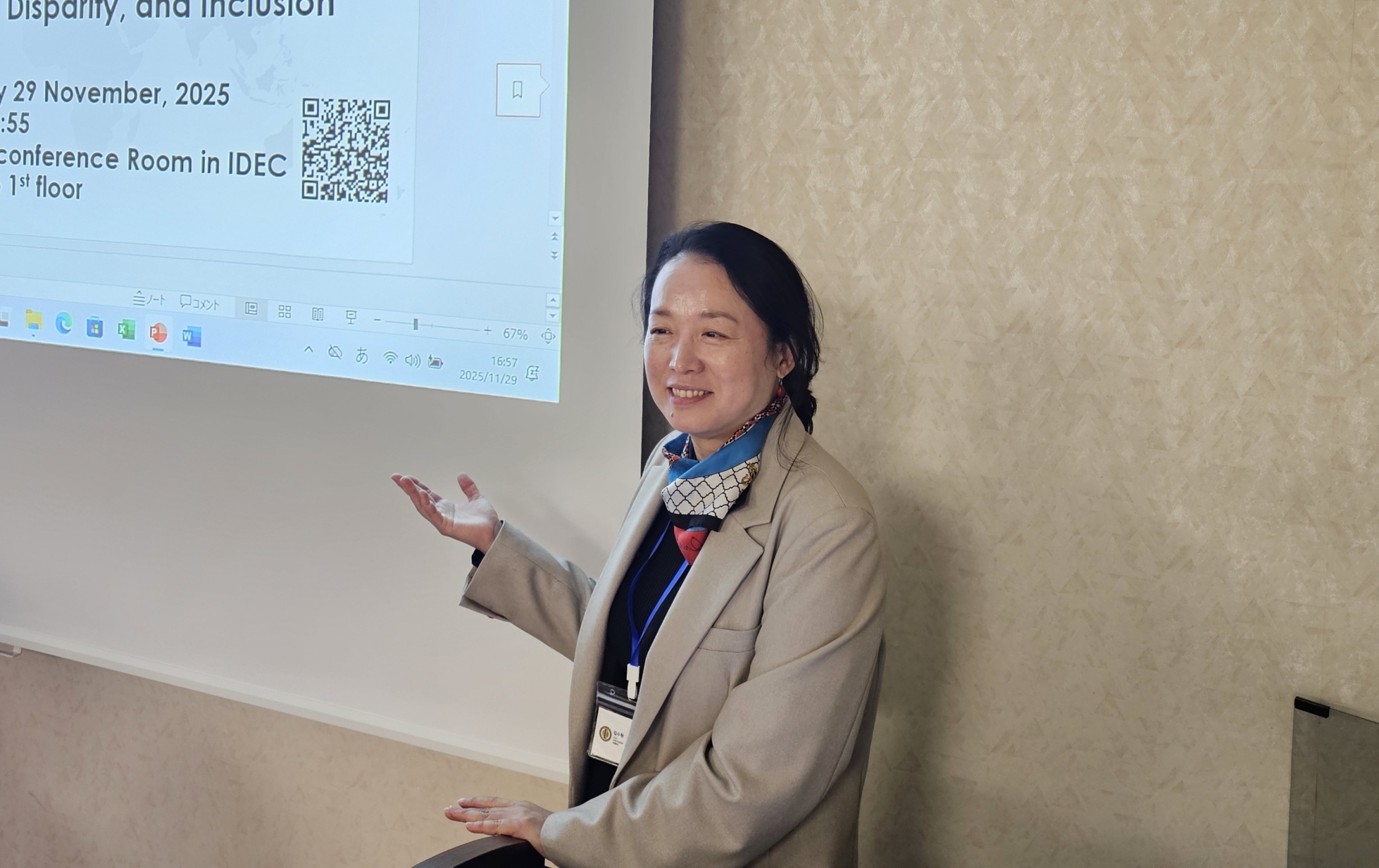
Professor Suweon Kim participated in the 36th JASID Annual Conference held in Japan, where she presented a paper titled “AI Museum Curation Project by a Southern Donor.” The conference, organized by the Japan Society for International Development, is one of the major academic gatherings in the field of international development studies in Asia.
The presentation addressed the dual identity of South Korea as both a former aid recipient and a current donor, and explored how this unique position could contribute to reshaping development cooperation in an era of multipolar global development governance. The study argued that development cooperation is not merely a diplomatic act of providing assistance, but also an expression of a donor country’s identity, philosophy, and soft power.
The presentation discussed how global development cooperation is undergoing multipolarisation, with traditional Western donors reducing their roles while emerging donors are becoming more prominent. In this context, South Korea occupies a unique position within the global aid architecture as the only member of the Development Assistance Committee (DAC) that has experienced colonial rule while also adhering to international development norms. This historical experience forms the normative foundation of Korea’s development cooperation identity, yet this identity has not been fully articulated due to the inherent irony that Korea, once colonised, often replicates Western development approaches and discourses.
To address this contradiction, the study attempted to bridge development studies and postcolonial theory through AI-based approaches. Through this approach, the study suggested a new framework for conceptualising South Korea’s development diplomacy and cultural ODA, positioning Korea as a potential leader in culturally oriented and digitally enabled development cooperation in the Global South.
